Thursday, 2 June 2022

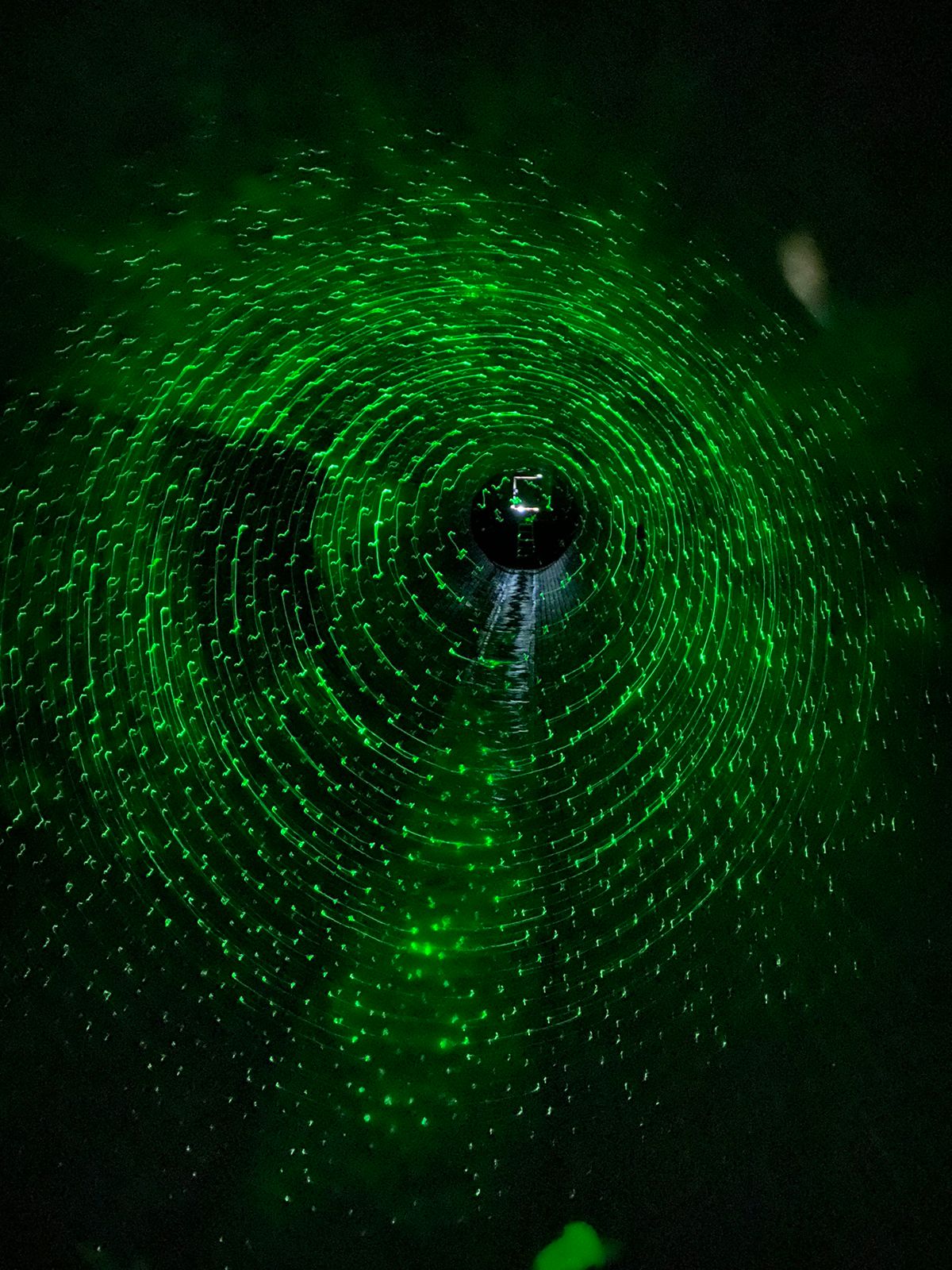
1887 Wood Head Tunnel Table Mountain


1887 Wood Head Tunnel Table Mountain

During the early days of construction of the reservoir, an aerial cableway similar to that in Kasteels Poort, was erected. It was neither successful and a trolley track with a set of lines laid on sleepers and constructed up the slope from the foot of the mountain. The water from Victoria, Alexandra and De Villiers ran down to Orange Kloof from whence it was piped across Constantia Nek and so on to Wynberg. The system is still in use today, though now the water goes through a filtration plant at Constantia Nek before being piped into Cape Town water supply. The Hely-Hutchinson Reservoir, was opened in 1904!

In 1905 Cape Town experienced its next shock when it discovered that the daily consumption had risen to over 11Ml per day in 1901 Mr Stewart reported that the Table Mountain reservoir could only supply 13,6Ml per day, Cape Town was once again in trouble. Three schemes were proposed but all had strict limitations. The water from Woodhead and Hely-Hutchinson continued to be used, and all of it passed through the Woodhead tunnel which emerged in Slangolie Ravine. Unfortunately, Slangolie Ravine though the shortest route, was a bad choice as an exit. The ravine surface became more and more unstable as time passed, and rock fall succeeded rock fall. Sometimes portions of the pipeline were swept away. Even more serious was the steady encroachment of the ravine towards the tunnel. In the 1950’s it became obvious that if the waters of Table Mountain were to be of further use to Cape Town, an alternative tunnel route would have to be found. As a result work commenced on the Apostles Tunnel in June 1960. This tunnel has its exit in Wood Buttress a couple of kilometres north of Slangolie Tunnel. It was a much more ambitious undertaking than the Woodhead, being some 1 300 metres in length. The Apostles Tunnel has now been in use for 38 years, whilst the Woodhead Tunnel is no longer operational.


Comment: Moderate adventure Hike not suitable for all. Permits need to be booked 4 weeks in advance. Maximum 6 participants.


1887 THE LIONS HEAD GOLD RUSH


1887 THE LIONS HEAD GOLD RUSH


During 1886 claims of gold fines came from Noordhoek and Glencairn, and a Lion’s Head Gold Syndicate was searching for gold on a farm owned by a Jan Hofmeyer (not “Onze Jan”) on the slopes of Lion’s Head. In 1887 they struck gold and the Cape Argus of 23rd November printed a Supplement of the mine and its workings, which was situated about 100 m below today’s start of the Lion’s Head hiking trail on Signal Hill Road. A gold rush stared with seekers climbing all over the mountain and a Mr Jacobus Vlok falling to his death. The Argus of 2nd December announced the formation of a new company to be called the Lion’s Head (Cape Town) Gold Mining Company that offered shares. A shaft of 45 m was sunk and from a ton of quartz containing pyrite, two ounces of gold was obtained at Wilkinson’s Mill in Kloof Street. Dr Paul Hahn of the south African College did an assay that looked promising, and believed gold could be found anywhere in a zone between the contact of granite and slate on the Sea Point seashore to the saddle between Devil’s Peak and Table Mountain. Under the watchful eye of the Commissioner of Crown Lands, Friedrich Schermbrucker, 7 ½ tons of ore were despatched to Britain and Germany, but only 10 pounds were tested, and the assay was not done by a requested chlorination process, so the results showed no gold. This was a great blow to the Mining Company who could now attract no more investors. By 1893 the Company had disbanded because in that year the City Council bought their property. The shaft remained open until 1951 when a fire fighter battling a mountain fire nearly fell in, so the entrance was bulldozed over and the lid was literally put on Cape Town’s gold mining hopes. It is unlikely that there were payable amounts of gold, but as the overseas assays were botched, nobody can say for sure. Anyway, the mountain was saved from the eyesore of mining operations, and today is a protected area.


Lion Battery was built from 1889 to 1890 and was armed with two 9 inch rifled muzzle loading guns. The Battery was remodelled in 1911, with new emplacements being constructed on top of the old works, and rearmed with two 9.2 inch Mk X breech loading guns. These guns could fire a 170kg shell to a maximum range of 28km. The firing of these guns ceased in 1935 due to blast damage caused in Green Point below the Battery.

The daily noon gun is now Cape Town’s oldest living tradition and the two guns used are the oldest guns in daily use in the world.

Signal Hill was the first Radar station in May 1941.
Radar could normally only see large ships not further than the horizon, but it was very helpful at night and poor weather conditions.

Comment: Easy educational historic Tour with a sneaky Underground Tunnel & Bunker Network. Gold was never found but who knows where the VOC treasure hides. Operating on most days. Maximum 25 participants.


1875 The deep bunkers in Parliament’s belly


1875 The deep bunkers in Parliament’s belly

The underground secrets of Parliament are out. Beneath the chambers and offices from where South Africa is governed, lies an intriguing network of secret bolt-holes and escape routes, apparently built for the apartheid leaders of yesteryear.

In addition to the legendary cold, damp dungeons - they are indeed there - subterranean secrets include concealed passages and bunkers, a hidden lift and a mysterious stairway leading to the one-time prime minister's office.

Years ago, a tunnel, which is now partially flooded and blocked with mud, is believed to have linked Parliament to the Castle, where an embattled politician could seek refuge.

A one-person lift, apparently designed to whisk people such as former prime ministers Hendrik Verwoerd or John Vorster to the roof for evacuation by helicopter in an emergency, was discovered recently.

During the Vorster era, a reinforced underground tunnel was built from Parliament to the basement of 120 Plein Street, formerly the H F Verwoerd Building, where cabinet ministers had their offices.

A few years ago, workers of the Department of Public Works uncovered the shaft of a secret lift linking this tunnel to one of the auditoriums at 120 Plein Street.

Believed to be a secret escape lift to allow Vorster to reach the roof of 120 Plein Street, the lift shaft was found when workers started breaking up the concrete base in the auditorium on which a bust of Verwoerd had been mounted.

The secret lift, big enough to accommodate only one person, goes down two floors to the basement, where it links up with the tunnel between Parliament and 120 Plein Street. The lift is still there but no longer works.

Only metres from the old Senate building lies another secret hideaway. An underground tunnel, which leads into a large dungeon, is believed to have been built as an escape route during the Verwoerd era.

Entrance to the dungeon is gained by climbing down a steep steel ladder. A tunnel then leads into a large underground room, which at present is half filled with water.

Parliamentary security officers said that one of the side tunnels from the dungeon was believed to have led to the Castle.

Security officials said that during a dry summer period, workers had followed the tunnel for some distance but had to turn back because it was blocked with mud. But, parliamentary security official Dirk Genis said it is believed that the tunnel was linked to the Castle many years ago.

A less sinister secret lies hidden two floors below 120 Plein Street. It is a fountain that seeps into a large holding dam. Officials said the water was so clear and fresh that one could drink it. Nkosi said the water was pumped to the parliamentary gardens to water the plants.

Comment: Easy educational historic walking Tour for the Historian. Operating when Parliament feels like it. Maximum 25 participants.


1870 Hex River Tunnel and Tunnel Camp


1870 Hex River Tunnel and Tunnel Camp

In the 1870’s this stretch presented a major obstacle during the construction of the railway between Cape Town and the diamond fields at Kimberley in the Northern Cape. The very steep gradients that had to be traversed only allowed for the use of a very narrow gauge (distance between the tracks) of 3 ft 6 in (1,067 mm) over the pass.

After initially making use of dual gauge, it was eventually decided to convert all existing railway tracks in the Cape Colony to this narrower gauge that was eventually to become known worldwide as Cape Gauge. The fact that most of the present-day railway lines in Africa are Cape Gauge can, therefore, be directly attributed to the Hex River rail pass. When the new Hexton Railway Route was opened, the old pass and Osplaas station became redundant and this is the route used today by the Hexpas Express.

A secluded private camp in the Hexriver. Hike, mountain bike, 4X4. Camp/Lodge site is pet friendly and fully equipped. Situated along the old historic railway line. 5 rustic wooden cabins bedding and linen provided. Fully equipped bush kitchen.

https://hexrivervalley.co.za/accommodation/

Comment: Easy very scenic full day driving and walking Tours of the Mountain Passes and their Tunnels suitable for all. Private Tour with possible overnight camping or lodging.  Maximum 2 participants or bring own Vehicles if more participants.


1870 Du Toits Kloof Manganese Mine


1870 Du Toits Kloof Manganese Mine

Although the Western Cape is not generally considered a mining area, over the centuries, there have in fact been a remarkable number of mining ventures in the area. Thus, at one time or another gold, silver, tin, manganese and tungsten mines have all operated in the region – honestly or fraudulently! Amongst the most fascinating of these mines have been those devoted to the extraction of manganese – and none more than that in Du Toit’s Kloof.
However, in the early-1870’s a substantial deposit of manganese ore was discovered in Du Toit’s Kloof above the point where the Molenaars River joins Du Toit’s Kloof Stream, i.e., near the old original road tunnel, up above to the right as you face Worcester direction. It is not clear who the original discoverer was of the deposit, but we know that by the mid-1870’s a substantial mining operation was underway on the site.

The ore that was exposed on the surface of the mountain could be, and indeed was, mined directly. However, in order to extract that portion of the orebody which was underground, the early miners drove a horizontal tunnel, known as a drive or adit, into the hillside until it intersected the orebody. The pieces of ore were then loaded underground into small railway trucks, holding perhaps 200 to 300kg, and these were run by hand along a gently sloping narrow-gauge railway track to the entrance of the adit.

Here the ore was sorted by hand with the pieces containing the highest percentage of manganese readily recognizable as being the densest and the darkest in colour. The poor-quality ore, which usually had patches of brown due to the presence of iron, as well as other waste rock, was dumped near the entrance to the adit.

The really daunting problem facing the miners at the time, was how the ore was to be transported to the nearest railhead, which was Wellington, many kilometres away, and from where it would be taken to Cape Town for export overseas. The present road through Du Toit’s Kloof, building of which commenced during the Second World War using Italian prisoners of war and was only opened in March 1949, was of course then not in existence, and the narrow cattle track which ran through the kloof would have been quite inadequate for the wagons which would be required to move such large masses of material.

It was therefore decided to build a cableway – described at the time as ‘an aerial wire tram’! – from the mine to a spot a few kilometres from Wellington, where the ground was relatively level – a distance of some eight kilometres. The terminus of the cableway is in the Daljosaphat Forest Reserve about 500 metres from Hawequas. I found it some years ago after a fire, but now that the forest has regenerated, it would take a fair hunt to find it again.

There were still some old bottles and pieces of porcelain plates that could be found on the site. Engines at either end of the support cable would pull buckets loaded with ore, from the mine along one of the cables to this terminus near Wellington, while the empty buckets would return along the other cable.

The cableway was designed, manufactured, installed and apparently operated successfully, although many of its technical details are still obscure. Given the remoteness, ruggedness and extreme steepness of parts of the terrain which had to be traversed, as well as the great
weight of the steel cables, the support towers and the haulage machinery, as well as the lack of suitable roads along which this great mass of material had to be hauled, this must without question rank as one of the truly great South African engineering feats.

Sadly, it has and was never acknowledged as such – or indeed in any way. Unfortunately as well, no photographic record of the cableway appears to have survived, but the illustrations in a roughly contemporary manual, C.G.Warnford Lock’s Practical Gold-Mining (London, 1889) provides us with what is no doubt a reasonably clear idea of what the cableway looked like.

Sometime In the late-1870’s the mine closed down. The reasons are not known, but is probably largely due to economics. Perhaps, like so many mines throughout the world, it ran out of capital rather than ore, or perhaps the world price of manganese fell to a point where mining was simply uneconomical? But the situation was to change in a most unexpected way.

In 1882 Robert (later Sir Robert) Hadfield, an eminent British metallurgist, made a remarkable discovery. Steel was tough but not very hard, while cast iron was hard but brittle. Hadfield was therefore searching for a material which possessed the toughness of steel with the hardness of cast iron. Eventually he discovered that a manganese-iron alloy possessed just those qualities – as well as being remarkably resistant to abrasion

Hadfield's discovery meant that throughout the world there was energetic prospecting for new deposits of manganese, while old deposits and mines were re-examined with fresh eyes. Clearly the abandoned Du Toit’s Kloof mine was one of these, for it cannot simply be a coincidence that in 1883 we learn that, although the mine had not yet actually resumed working, a new cable was being installed in the cableway system.

The following year the mine is reported as having been re-opened and was being worked by a private company, the ore being described as ‘plentiful and rich’. Once again, we have no evidence as to how long the mine operated and how much ore was actually transported to Wellington, but there is evidence that by the turn of the century it was not followed through.

Thus ended what is thus far the Western Cape’s largest mining venture. Like so many other mines throughout the world, it raised high the hopes of many people, absorbed a substantial amount of capital, was conceived with technical boldness and vision, prosecuted with skill, determination and courage by the miners themselves, but in the end failed due to one – or perhaps both – of those two eternal enemies of mining ventures everywhere: shortage of capital and insufficient reserves of payable ore.

Fraud has of course also played a prominent role in the failure of numerous mining ventures, with exploration samples all too often being ‘salted’ to increase their apparent value, but there is no evidence that this was the case here.

Today all that remains of this bold venture are the underground workings at the mine itself (which must be entered with extreme caution due to a semi-collapsed portion about halfway along the adit where it passes through a clay band), there are some very dangerous open excavations above the entrance to the adit, a few of which are flooded, a number of piles of ore, pieces of the original machinery for working the cableway, and a number of rectangular stone structures which served as the foundations for the steel towers carrying the steel ropes of the cableway.

As far as the route of the original cableway is concerned, this can still be traced in many places by the pieces of manganese ore lying on the ground – presumably spilled out of the containers moving overhead. The stone foundations of the terminus of the cableway, not far from Wellington and located as mentioned in the forest, has unfortunately been damaged by forestry operations and is urgently needing restoration by a local historical group. Failing this, then another visible piece of our history will soon disappear. Of the company records there is, sadly, virtually no remnant.

Comment: Very scenic full day driving Tour, including a moderate hike to the Manganese Mine. Maximum 2 participants or bring own Vehicles if more participants.


1795 Fort Wynyard Bunkers and the disappearing Gun


1795 Fort Wynyard Bunkers and the disappearing Gun

On June 11, 1795, a squadron of British warships anchored in False Bay. In reaction the commander of the Cape forces ordered that a new battery, Kijk-in-de-pot Battery, be built on a hillock overlooking what is now Granger Bay.

Kijk-in-de-pot referenced the blubber pots of the whaling station in Granger Bay directly below the battery.

On 13 September of the same year the Dutch forces at the Cape capitulated.

 In 1827 the British decided to dismantle the Kijk-in-de-pot Battery, but after the outbreak it was rearmed on April 12, 1861.

The Kijk-in-de-pot battery was improved in 1862 and renamed after Lieutenant-General Robert Henry Wynyard. It remained operational until August 15, 1945.

On 14 May 1976 Fort Wynyard was proclaimed as a national monument.

In 1992 the fort became the headquarters of the Cape Garrison Artillery. 

Most of the 1880 guns around the world – similar to this one – had all been demolished. “The 22000kg gun has a hydraulic mechanism which raised the barrel to the top of the pit, which was covered by a shield, only the top part of the gun would stick out to fire and would go back in and gunners would reload it which would take about a minute. The gun could swivel as it has wheels,”

Comment: Easy educational adventure walking Tour with a touch of Military History suitable for all. Operating when the Military feels like it. Maximum 25 participants.